Seasonality is one of those things that sounds like florist-speak until it affects your quote. A florist who tells you peonies are available for your November wedding is either planning to fly them in from South America at a significant markup or doesn't know flowers as well as you need them to.
This guide covers what's actually growing and available in Alabama by season — and what that means for your wedding.
Why Seasonality Matters
Price. Out-of-season flowers cost more because they come from further away and require more handling. A peony in May is a field flower. A peony in November is a freight flower.
Quality. Flowers at the peak of their local season are sturdier, more vibrant, and hold up better through a wedding day. A bloom forced to bloom off-season is more fragile.
Look. In-season flowers have a fullness that's hard to fake. When you're building a garden-style arrangement, the texture and movement that makes it work depends on flowers that are genuinely at their peak.
Spring Weddings in Alabama (March–May)
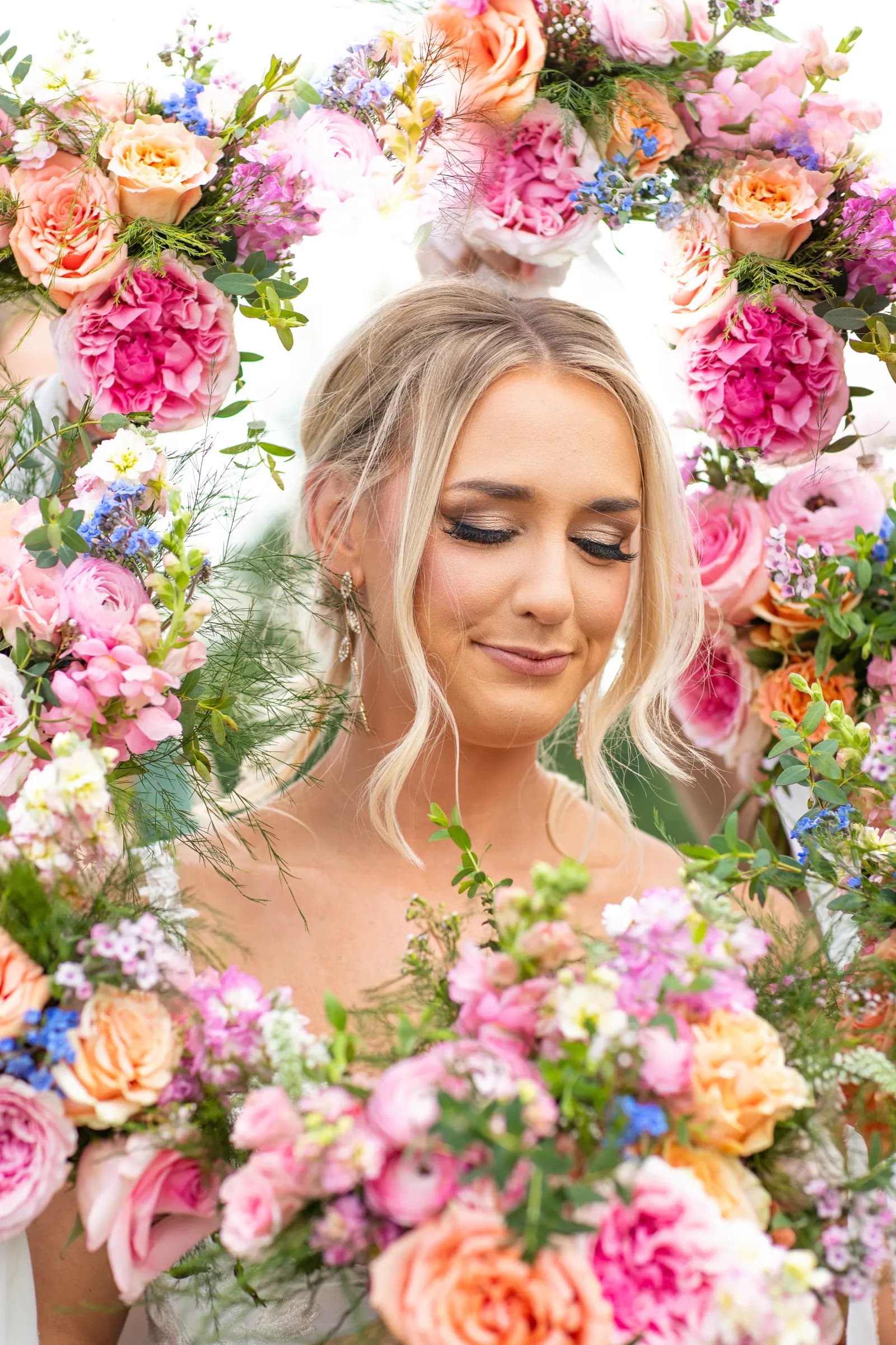
Spring is the best window for a wide variety of blooms. Alabama springs are mild and wet, which means local growers are pulling from a full palette.
What's available: Ranunculus, sweet peas, peonies (late April and May), lisianthus, tulips, anemones, garden roses, lilac, snapdragons, stock, muscari, and a wide range of locally-grown cutting flowers.
What to know: Peony season in Alabama is shorter than most brides expect — roughly four to six weeks in late spring. If peonies are on your list, a May wedding is your best window.
Spring is peak wedding season in NE Alabama. If your date falls between late April and early June, book early.
Summer Weddings in Alabama (June–August)
Alabama summers are hot. That affects flower selection more than any other season. Not all flowers survive a ceremony in the sun when temperatures are in the 90s.
Heat-hardy choices: Zinnias, sunflowers, dahlias (early summer), marigolds, yarrow, statice, amaranth, gomphrena, and most tropical foliage. These hold up.
What doesn't hold well: Peonies, sweet peas, ranunculus, and other delicate spring blooms wilt quickly in summer heat. A florist who offers them for an outdoor July ceremony isn't accounting for what happens between the ceremony and the reception.
Practical advice: For summer weddings with outdoor ceremonies, discuss timing with your florist. Some flowers should be refrigerated until the last possible moment. If you're doing outdoor portraits, keep your bouquet out of direct sun between shots.
Locally-grown dahlias are a summer standout in Alabama. If your florist has a farm connection or grows their own, ask about dahlias — they're typically available from late June through October.
Fall Weddings in Alabama (September–November)
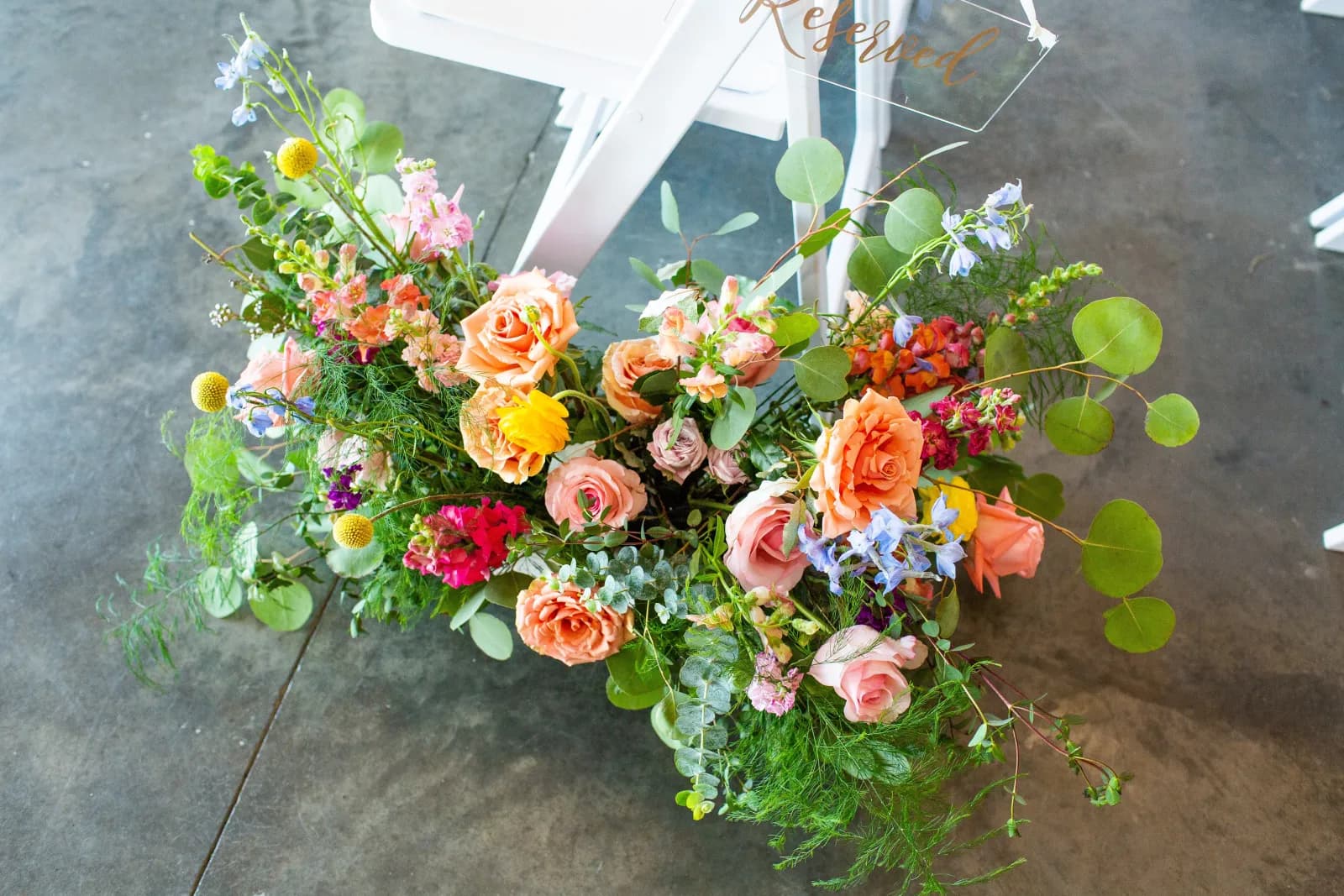
Fall is the other peak season in NE Alabama. Temperatures drop enough for a wider range of blooms to perform well outdoors, and the color palette for fall florals aligns naturally with the season.
What's available: Dahlias (in full production through October), Japanese anemone, marigolds, celosias, amaranth, mums, ornamental cabbage, dried and textural elements, late-season sunflowers, and a growing range of locally-grown autumn stems.
The texture advantage: Fall gives you access to seed heads, dried grasses, and textural elements that don't exist in spring. If you want an arrangement that leans rustic or wildflower-adjacent, September and October are the best windows.
November pushes into cooler temperatures. Locally-grown options narrow, but wholesale availability expands. This is when sourcing relationships and florist knowledge matter most.
Winter Weddings in Alabama (December–February)
Winter narrows local growing significantly, but the florals available are some of the most striking of the year.
What works well: Amaryllis, paperwhites, hellebores (January–February), camellias, branches (quince, cherry, pussy willow), evergreen foliage, eucalyptus, and winter berries. Greenhouse-grown or imported ranunculus and anemones are available through most wholesale channels.
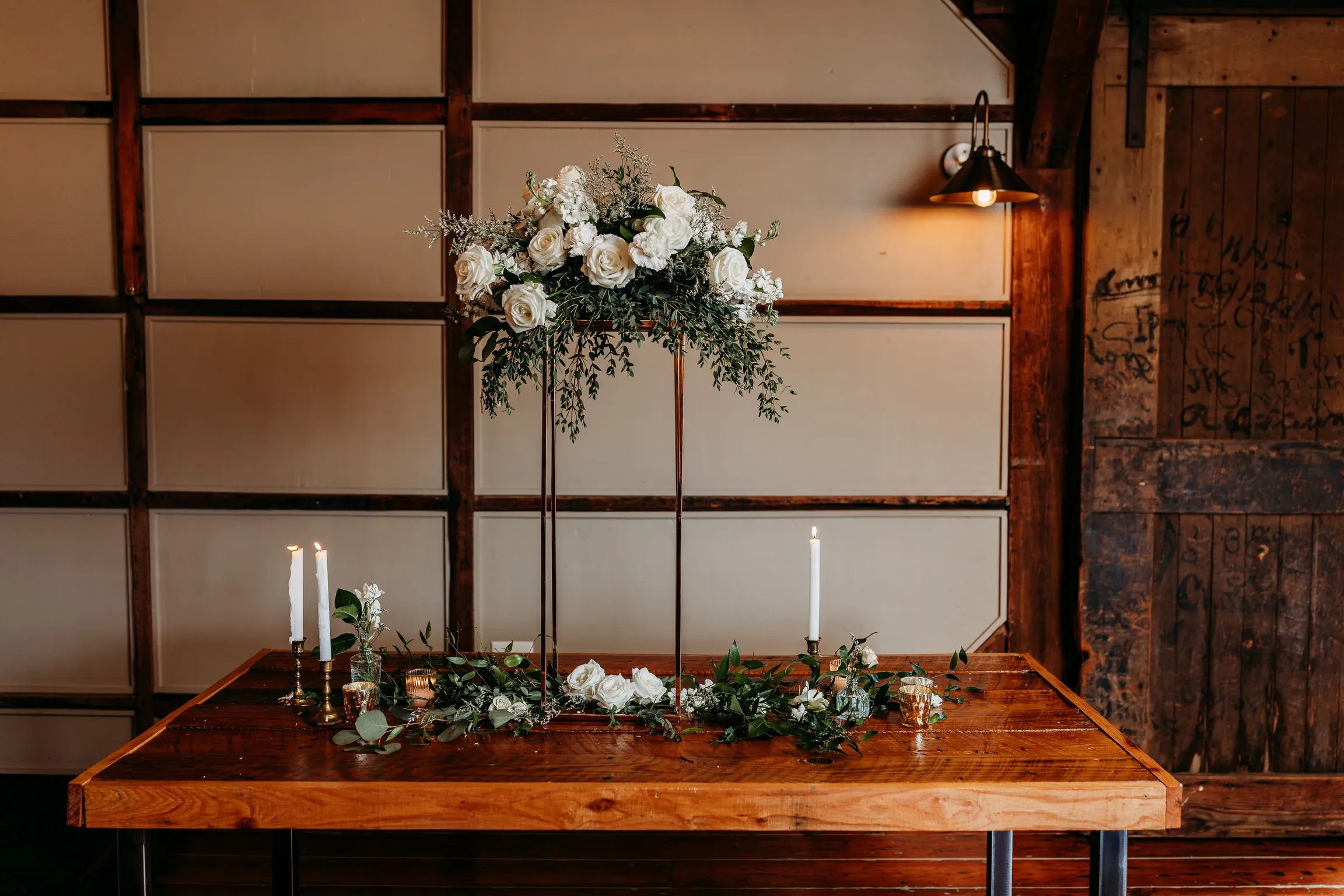
The winter aesthetic: Winter weddings that lean into the season — deep greens, white and blush, candlelit receptions — are often the most visually cohesive. Forcing a garden-in-bloom aesthetic in January requires flying in expensive imports. Working with what's actually available in winter produces something more distinctive.
The Takeaway
Talk to your florist about seasonality early. Any florist who commits to a specific bloom without asking about your date doesn't know or doesn't care about what's available. A florist who tells you what's at its best for your date and proposes around that is one who actually knows flowers.
If you're planning a Northeast Alabama wedding and want to know what will be available for your specific date, reach out here. Heather will tell you exactly what's looking good and what she'd recommend for your palette and season.